

As summer winds down, the Penn State students in this year’s City Semester Pittsburgh program are reflecting on their experiences living, learning, and working in the city. City Semester is a unique opportunity for students of all majors to explore real-world sustainability challenges in an urban context. Based at the Franco Harris Pittsburgh Center, students take an in-depth sustainability course (EARTH 412) with instructor Evaine Sing and intern with community partner organizations across the region.
With just a few weeks left, we asked some of the students to share more about their internship work, what they’ve learned in the classroom, and the highlights of their summer in Pittsburgh.
Hiba Al-Nabhani
Majors: Data Science and Economics
Internship Partner: Green Building Alliance
What is your role in this internship?
I work with the 2030 district team as a data analysis and research intern.
What does your day to day look like at the internship?
- attend and document meetings with partners
- ensure the database and progress reports for our partners are up to date
- perform data entry and analysis on energy start portfolio manager and Maalka
- conduct research on capital improvement planning for small businesses
What is something you’ve learned in the EARTH 412 class that has surprised or impacted you?
Something that really impacted me in EARTH 412 was realizing how much of our current lifestyle, especially under capitalism, is built on systems that don’t account for environmental harm in any meaningful or measurable way. The economy puts a price on everything, but the damage we do to the environment isn’t reflected in monetary terms. That disconnect means we keep over-consuming without feeling the consequences directly, and it’s usually marginalized communities or people in developing countries who end up suffering the most. I was surprised by how invisible these costs are in mainstream decision-making, and it’s made me want to learn more about how we can reshape these systems to prioritize sustainability and equity. At the end of the day, money is just a paper and when our environmental system collapses, we won’t be able to eat money. So moving forward, I want to dive deeper on how to break this concept down into an economic lens that is measurable and easy to understand.
What has been the highlight of the entire City Semester program so far?
The highlight of the City Semester program for me has been learning about idealistic design and how it has the power to reshape our culture and influence how future generations think about the environment. We were first introduced to this idea in the classroom, but it really came to life during our trips to places like Phipps, Tree Pittsburgh, and the Frick Environmental Center. Seeing how intentional design can create spaces that connect people to nature helped me realize how much our surroundings influence the way we see ourselves in relation to the environment. Too often, humans see themselves as separate from nature, but we’re part of it, and learning how design (whether that’s building design, culture design, economic design…) can help shift that mindset was really impactful. It made me think deeply about how culture and space can work together to build a more sustainable future.
Mark Hinlo
Major: Environmental Systems Engineering
Internship Partner: Allegheny County Conservation District
What is your role in this internship?
This summer, I am working for ACCD as their urban soils program intern. I help coordinate and execute site visits for soil lead screening, as well as conduct community outreach for our monthly soil lead screening pop-ups within the county. A major project of mine is working with ArcGIS to create a historically representative map of all our completed lead screenings to help ACCD identify underserved areas that could benefit from our outreach and education.
What does your day-to-day look like at the internship?

My typical week consists of a balance between physical and administrative work. Every week, I conduct a site visit at the request of a community land steward, collecting samples to be processed in our lab. At the office, I analyze and share the results with them, offering them resources for moving forward with their projects. Throughout the week, I shadow other staff members of ACCD on their one-on-one consultations with clients or larger community workshops.
What is something you’ve learned in the EARTH 412 class that has surprised or impacted you?
One thing that has carried with me is the bigger picture of the term “sustainability.” Often, we think about sustainability as preserving the environment around us, but we often fail to picture ourselves as part of the natural landscape. Achieving sustainability is truly about balancing the coexistence of us and our natural resources while maximizing social outcomes by creating equitable solutions or removing barriers altogether.
What has been the highlight of the entire City Semester program so far?
Within our small program, it has been a blast getting to know everyone in our class and our professor, Dr. Sing. With a diverse array of majors, our discussions and proposed solutions to multifaceted issues in sustainable development has been more than intriguing.
Madison Mascellino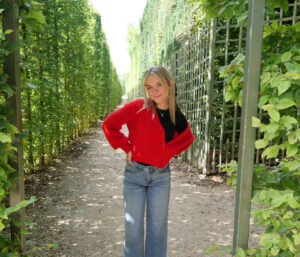
Major: Landscape Architecture
Internship Partner: Studio for Spatial Practice and Tree Pittsburgh
What is your role in this internship?
During my internship with Studio for Spatial Practice, I take on both hands-on and design-oriented tasks. I regularly join site visits to evaluate how past projects have evolved and to document conditions for upcoming work. My primary responsibility is developing a SketchUp model for the proposed project at the Brashear CARES Community Center, which has allowed me to engage in the early stages of the design and planning process.
At Tree Pittsburgh, I work in the Nursery, where I help the team, along with working on volunteer days. My role includes transplanting seedlings into larger pots, maintaining nursery health through fertilizing and weeding, and managing thousands of young trees. This work directly supports the organization’s mission to expand and protect Pittsburgh’s green spaces.
What does your day-to-day look like at the internship?
Studio for Spatial Practice is a small firm based in Bloomfield. My weeks often include site visits around the city to observe how completed projects are aging in the landscape. Seeing the full lifecycle of a project from concept to implementation has been a valuable learning experience. I also spend time in the office working on digital design tasks, primarily using Vectorworks and SketchUp.
My days at Tree Pittsburgh are more physical, based at their riverside campus filled with vibrant greenhouses and rows of young to mature trees. Summer is a busy time in the nursery, with much of my work focused on transplanting seedlings, moving heavy buckets of soil, and ensuring the trees are thriving. It’s challenging work, but very rewarding.
What is something you’ve learned in the EARTH 412 class that has surprised or impacted you?
Even though I’m a Pittsburgh native, EARTH 412 opened my eyes to how rich the city is when it comes to green buildings and sustainable development. I was surprised to learn that Pittsburgh is considered a leader in this area, with more green-certified buildings than many other U.S. cities. It has helped me see the city through new eyes and deepened my appreciation for the work being done in the city I call home.
What has been the highlight of the entire City Semester program so far?
The highlight of the program has been meeting so many guest speakers from across the sustainability field. It’s been inspiring to hear about their work firsthand and to make real connections with professionals leading change in the city.
Sandor Strnisa
Major: Landscape Architecture
Internship Partner: Tree Pittsburgh
What is your role in this internship?
Heritage Nursery intern
What does your day-to-day look like at the internship?
During the first half of the internship, we would spend the entire day transplanting trees with volunteer groups of roughly 10 to 15 individuals. This process involved placing trees into larger pots and relocating them into our nursery hoops and bays. As we reached our transplanting goal, we began working on weeding the tree pots and surrounding landscape, pruning the trees to ensure ideal growth, and helping with side projects such as repairing the chicken-wire fence and the rainwater collection system.
What is something you’ve learned in the EARTH 412 class that has surprised or impacted you?
I was genuinely most interested in learning about Pittsburgh’s sewage/waste management systems. I am familiar with the city’s dominant history of steel production and pollution from said industry, but I hadn’t realized that their sewage management system also heavily contributes to pollutants infiltrating the city’s waterways.
What has been the highlight of the entire City Semester program so far?
I really enjoyed the educational field trip tours to the Frick Environmental Center and Phipps Conservatory. It was just fascinating learning about the origins of both structures, as well as the inner workings within the buildings themselves. I also learned a lot about tree identification and plant care from my opportunity with Tree Pittsburgh.
Noah Bridge
Major: Mechanical Engineering
Internship Partner: Department of City Planning
What is your role in this internship?
As the solar intern, I find areas in Pittsburgh where solar projects are viable and create an actionable plan for solar implementation.
What does your day-to-day look like at the internship?
Working in the 412 Blvd of the Allies building on presentations and talking to city planners.
What is something you’ve learned in the EARTH 412 class that has surprised or impacted you?
How sustainability is such a wide scope of interdisciplinary fields.
What has been the highlight of the entire City Semester program so far?
Definitely the field trip with the Irish students.
Looking Ahead
The students’ reflections are a powerful reminder of how experiential learning, real-world projects, and community connection can shape a meaningful education. As this summer’s City Semester cohort wraps up their time in Pittsburgh, they leave with new perspectives, skills, and a deeper appreciation for the intersection of environment, equity, and design. We’re proud of the work they’ve done and excited to see where their paths lead next.